
A Philosophy for Teaching with PhET
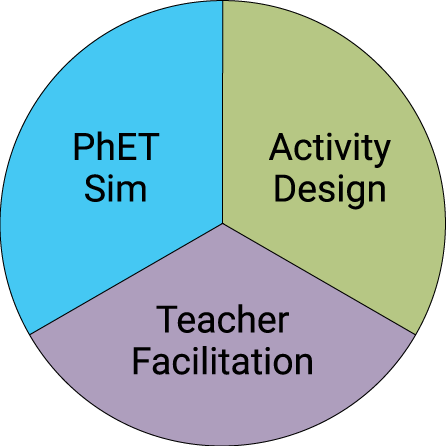
The effectiveness of PhET simulations is built on the belief that students learn best when they are active participants in their own learning, not passive recipients of information. Simulations are designed to invite curiosity, spark productive struggle, and help students see themselves as capable scientists and mathematicians. But, the simulation is only one piece of the picture.
Thoughtful activity design – including well-crafted learning goals and strategic questioning – shapes how students engage with the sim, keeping them in a mode of genuine inquiry rather than answer-seeking.
Teachers must know their students: their prior knowledge, their misconceptions, and the contexts that make learning meaningful to them. Skilled teacher facilitation creates an environment where student ideas are valued and discovery is shared.
When these three components work together, simulations become far more than digital tools – they become a doorway into genuine scientific and mathematical thinking.
Guides
PhET's Goals for Students and Teachers
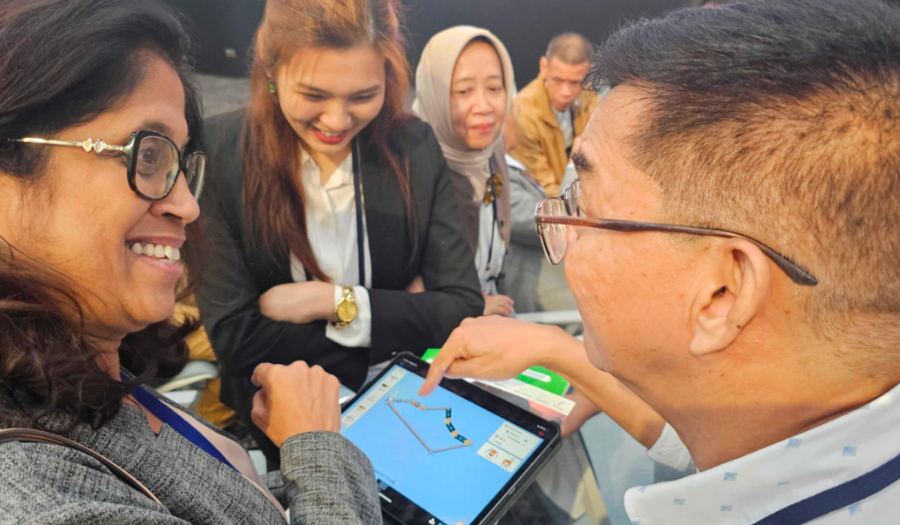
PhET simulations are built to spark genuine scientific curiosity– empowering students to ask questions, test ideas, and see themselves as scientists. For teachers, they offer a framework for creating student-centered classrooms where inquiry, agency, and deep conceptual understanding can flourish.
PhET's Goals for Students and TeachersWriting Learning Goals
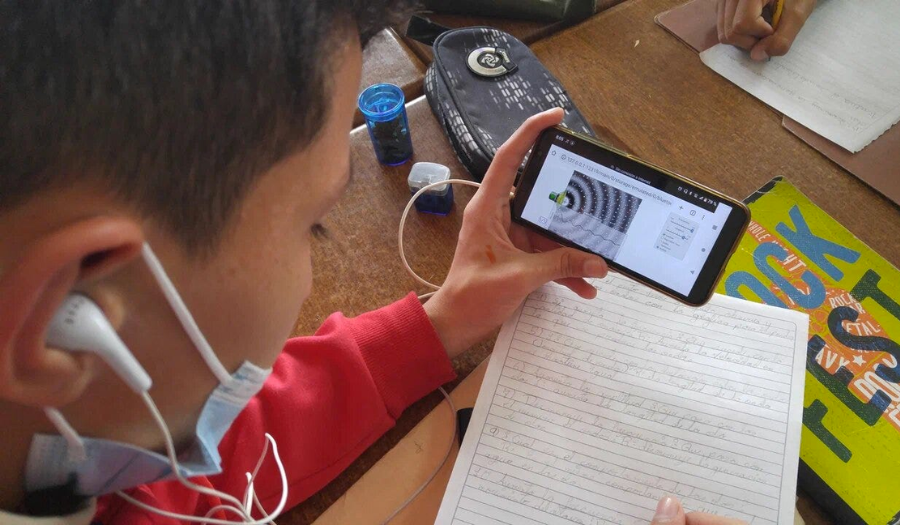
Well-crafted learning goals are the foundation of meaningful simulation activities, guiding students toward specific, measurable outcomes that challenge them to think and discover. Packed with action verbs and real examples, this guide offers practical tools to help you write goals that inspire deep engagement.
Writing Learning GoalsActive Learning with PhET
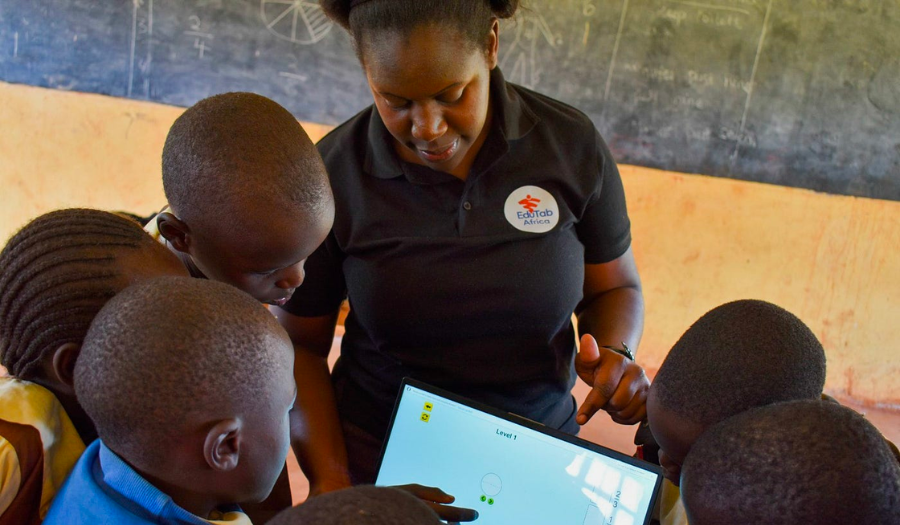
PhET simulations are most powerful when paired with a teaching approach that puts students at the center of their own learning. Explore the principles of Active Learning and how to bring them to life in your classroom through thoughtful activity design, meaningful scaffolding, and a culture that welcomes curiosity and productive struggle.
Active Learning with PhETVideos
Why I founded PhET, the goal and unique features - Carl Wieman
Nobel Laureate Carl Wieman describes the ideas that guided the founding of the PhET Interactive Simulations project, and how they have grown over time to become powerful, internationally-recognized learning tools.
A Brief Introduction to PhET
What are the PhET Interactive Simulations and what makes them effective? This short video gives a brief introduction to the key features of the simulations.
Teachers and Students Speak about PhET
What do teachers and students think about PhET simulations? Hear directly from individuals in the classroom about how using simulations enhances instruction and learning.
Exploring PhET Sims Design Process
What makes a PhET simulation unique? Watch to discover more about how PhET sims are designed and tested.
PhET Website Tour
Take a quick tour of the PhET website: find simulations, activities, resources to learn how to get the best out of simulations, and more!
PhET Powerpoint Add-in
Learn to embed PhET sims directly into your Powerpoint slides.
PhET Quick Tips: Custom Screens
Learn how to easily customize PhET simulations to only show specific screens.
Explore More
Explore our Professional Learning Database (Coming Soon!) for upcoming events and additional resources.
Find gold star activities that exemplify PhET's teaching philosophy.
Read more from PhysPort: How do I use PhET simulations in my physics classes?